
Updated 10/11/2026
A public adjuster is a licensed insurance professional who works for you, not your insurance company, to document a fire loss, read your policy and negotiate your settlement. In Texas, public adjusters are licensed by the Texas Department of Insurance (TDI) and can charge no more than 10% of your claim settlement. After a house fire, when the damage is extensive and the claim is complicated, a public adjuster can help make sure the settlement covers what it will really cost to rebuild your home.
We’re sorry if you’re reading this after a fire. Master Remodelers is a family-owned remodeling company that has helped homeowners in Houston, Pearland, Friendswood, League City, Clear Lake and Galveston rebuild since 1998. We are not public adjusters and we don’t handle insurance claims. Texas law doesn’t allow contractors to do that. What we can do is explain how the process works, so you can make informed decisions, and rebuild your home once your claim is settled.
Table of Contents
What to Do in the First Days After a House Fire
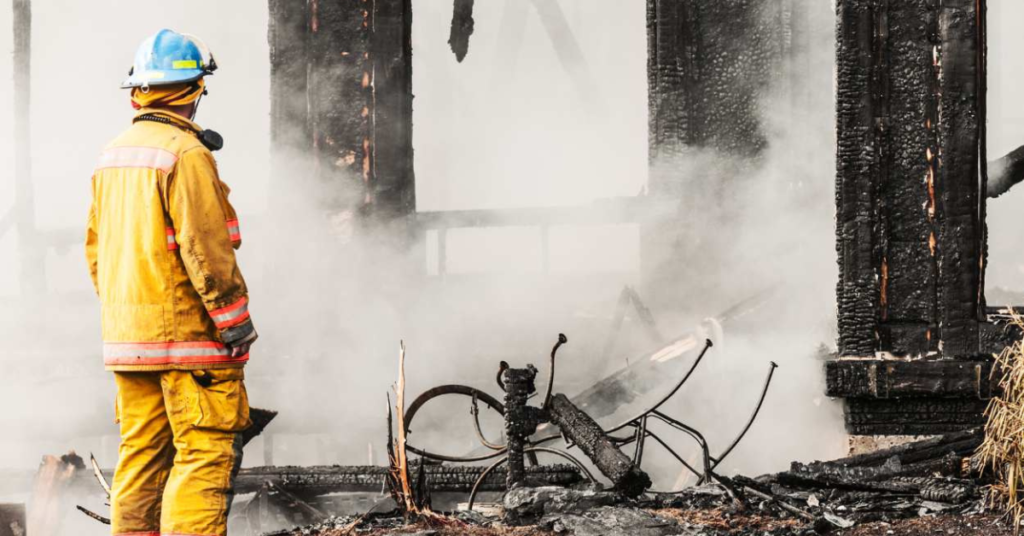
- Make sure everyone is safe, and don’t go back inside until the fire department says it’s safe.
- Call your insurance company to report the claim, and ask what your policy pays for temporary housing (often called additional living expenses or “loss of use”).
- Get a copy of the fire report from the fire department.
- Take photos and video of all damage before anything is moved or thrown out.
- Prevent more damage. TDI tells homeowners to do what’s needed to keep damage from getting worse, such as tarping the roof and boarding up openings.
- Keep every receipt for hotels, meals, clothing and emergency repairs.
- Don’t sign anything in a hurry, including a settlement offer or a contract with anyone who knocks on your door.
Your Homeowners Policy: The Coverages That Matter After a Fire
Most Texas homeowners policies include four parts that come into play after a fire:
- Dwelling coverage pays to repair or rebuild the house itself.
- Personal property coverage pays for your belongings: furniture, clothing, electronics and more.
- Additional living expenses (loss of use) pay for temporary housing and extra costs while your home can’t be lived in.
- Your deductible is the amount you pay before insurance pays.
Check whether your policy pays replacement cost or actual cash value. Replacement cost pays what it costs to replace items new, while actual cash value subtracts for age and wear. That difference can be large after a fire.
Insurance Company Adjuster vs. Public Adjuster
Insurance company adjuster | Public adjuster | |
|---|---|---|
Works for | Your insurance company | You, the policyholder |
Who pays them | The insurance company | You, from your settlement (up to 10% in Texas) |
What they do | Evaluate the claim for the insurer | Document the loss, read your policy, prepare and negotiate your claim |
Licensed by | TDI | TDI |
An insurance company adjuster may be an employee or an independent adjuster hired by the insurer. Either way, they evaluate the claim on the insurance company’s behalf. A public adjuster is the only adjuster whose job is to represent you.
How a Public Adjuster Helps After a Fire
- Reads your policy and explains what’s covered, including coverages homeowners often miss, like code upgrades, debris removal and smoke damage.
- Documents the full loss: structural damage, smoke and soot throughout the house, water damage from firefighting, and a room-by-room inventory of your belongings.
- Prepares and submits the claim with estimates and supporting evidence.
- Negotiates with your insurance company on your behalf.
- Handles the paperwork and follow-up, so you can focus on your family.
A fire claim often has thousands of line items. Having someone who does this every day can make the difference between a settlement that covers the rebuild and one that falls short. A public adjuster can’t guarantee a higher settlement, so be careful of anyone who promises one.
What a Public Adjuster Costs in Texas
According to TDI:
- The fee can’t be more than 10% of the total amount the insurance company pays on your claim.
- The fee can be based on the whole settlement, not just the extra amount the adjuster gets you.
- You can ask for the fee to be written as a flat dollar amount instead of a percentage.
- You may still owe the fee even if the insurance company doesn’t raise its offer, and you still pay your deductible.
Ask what the fee will be and whether it’s negotiable before you sign.
How to Choose a Public Adjuster in Houston, Pearland or Galveston
- Verify the license by calling the TDI Help Line at 800-252-3439. Ask about complaints and disciplinary actions.
- Ask friends and family who have used one, and read online reviews.
- Get the fee in writing, and make sure the contract says whether the adjuster will inspect your home, talk to your insurer, and how long settlement should take.
- Know your right to cancel. In Texas, you can cancel a public adjuster contract within 72 hours of signing, for any reason. After 72 hours, you can’t.
- Watch for red flags. TDI says public adjusters can’t knock on your door asking for business during a natural disaster or after 9 p.m., can’t take referral fees from contractors or anyone else involved in your claim, and can’t keep you from talking to your insurance company.
A note on the term “certified public adjuster”: Texas licenses public insurance adjusters. “Certified” is not a separate Texas license, so look for a current TDI license.
Know the Deadlines Your Insurance Company Must Meet
TDI says your insurance company must:
- Acknowledge your claim within 15 business days and start asking for the information it needs.
- Tell you whether it will pay within 15 business days after it gets everything it needs from you. It can extend that by 45 days if it explains why, and it must explain any denial in writing.
- Pay within 5 business days after it agrees to pay all or part of the claim.
If you have a problem with your insurer, you can file a complaint with TDI.
Why Your Contractor Can’t Handle Your Claim
Under Texas law, contractors can’t advertise that they’ll handle your insurance claim, and public adjusters can’t act as your contractor. Contractors also can’t waive or absorb your deductible. Be cautious of any company that offers to do both, or offers to “cover” your deductible.
Master Remodelers’ role starts with the rebuild. We can give your public adjuster or insurance company a detailed, itemized rebuild estimate.
Rebuilding After the Fire
Once your claim is settled, Master Remodelers can manage the rebuild from demolition to final walkthrough:
- Demolition and debris removal, and removal of smoke- and water-damaged materials
- Structural repairs and framing
- Roofing and siding
- New drywall, flooring, paint and trim
- Kitchens and bathrooms
- A whole home remodel if you want to change the layout while you rebuild
Many homeowners use the rebuild to make upgrades their old home didn’t have. If the work costs more than your settlement covers, Master Remodelers offers home improvement financing, including 0% options for qualified buyers.
Why Homeowners Choose Master Remodelers to Rebuild
- Family owned and operated since 1998, led by President Donald “Don” Borden.
- Rated A+ by the BBB, and winner of the Pulse of the City Award in 2025 and 2026.
- One team from demolition to final walkthrough, including permits and inspections.
- Licensed and insured
Frequently Asked Questions
A public adjuster works for the homeowner, not the insurance company, to read the policy, document all fire, smoke and water damage, prepare the claim and negotiate the settlement with the insurance company. Public adjusters in Texas are licensed by the Texas Department of Insurance.
A Texas public adjuster can charge up to 10% of the total amount the insurance company pays on your claim. The fee can be based on the whole settlement, and you can ask for it to be written as a flat dollar amount instead of a percentage.
Yes, within 72 hours of signing, for any reason. After 72 hours, you can’t cancel the contract.
Call the Texas Department of Insurance Help Line at 800-252-3439. TDI can confirm the license and tell you about complaints or disciplinary actions.
No. Under Texas law, contractors can’t advertise that they’ll handle your insurance claim, and public adjusters can’t act as your contractor. Contractors also can’t waive your deductible.
Your insurance company must acknowledge your claim within 15 business days, tell you whether it will pay within 15 business days after it gets everything it needs from you (or up to 45 days more if it explains why), and pay within 5 business days after it agrees to pay.
Not always, but a public adjuster can help when the damage is extensive, the policy is complicated, or you believe the insurance offer won’t cover the cost to rebuild. For a small, simple claim, the fee may not be worth it.
When You’re Ready to Rebuild
Related: Patio Covers · Outdoor Kitchens · Windows · Kitchen Remodeling · Garage Conversions · Roofing and Siding