
Updated 10/27/2026
In most cases, “hurricane windows” and “impact windows” mean the same thing: windows with laminated glass in a reinforced frame that have passed a standardized test for flying debris and hurricane-force wind pressure. The difference that actually matters is whether a window is impact-rated or only wind-rated. A wind-rated window is built to resist wind pressure but hasn’t been tested against debris. An impact-rated window has. On the Texas coast, ask for the impact rating and the test standard in writing, whatever the window is called.
Master Remodelers is a family-owned remodeling and window replacement company that has served Houston, Pearland, Friendswood, League City, Clear Lake, Seabrook and Galveston since 1998. Here’s how to sort out the terms and choose the right protection for your home.
Table of Contents
Why Two Names for One Product?
“Impact window” is the technical term. It describes a window that has passed impact testing. “Hurricane window” is a marketing term, and companies use it in different ways. Usually it means an impact window. Sometimes it’s used for a window that only has a high wind-pressure rating (called a design pressure, or DP, rating) and no impact rating.
That’s why the label doesn’t matter as much as the paperwork. Before you buy, ask:
- Is it impact-rated? Look for testing to ASTM E1886 and ASTM E1996, the standards the Texas Department of Insurance (TDI) points to for windstorm protection.
- What’s the design pressure rating? Higher DP numbers mean the window resists stronger wind loads.
- Is it approved for windstorm inspections in Texas? If you’re in the coastal windstorm area, your installer should use a product that will pass a TDI windstorm inspection.
Impact-Rated vs. Wind-Rated at a Glance
Impact-Rated Window | Wind-Rated Only | |
|---|---|---|
Glass | Laminated: two panes bonded to a tough plastic interlayer | Usually standard insulated (tempered or annealed) glass |
Tested for flying debris | Yes (ASTM E1886/E1996) | No |
Tested for wind pressure | Yes | Yes |
If the glass is struck | Cracks but stays in the frame | Can shatter and leave an opening |
Needs shutters in a storm | No | Often, in debris-prone coastal areas |
Extra benefits | Security, noise reduction, UV filtering | Lower cost |
Cost | Higher | Lower |
How Impact Windows Work
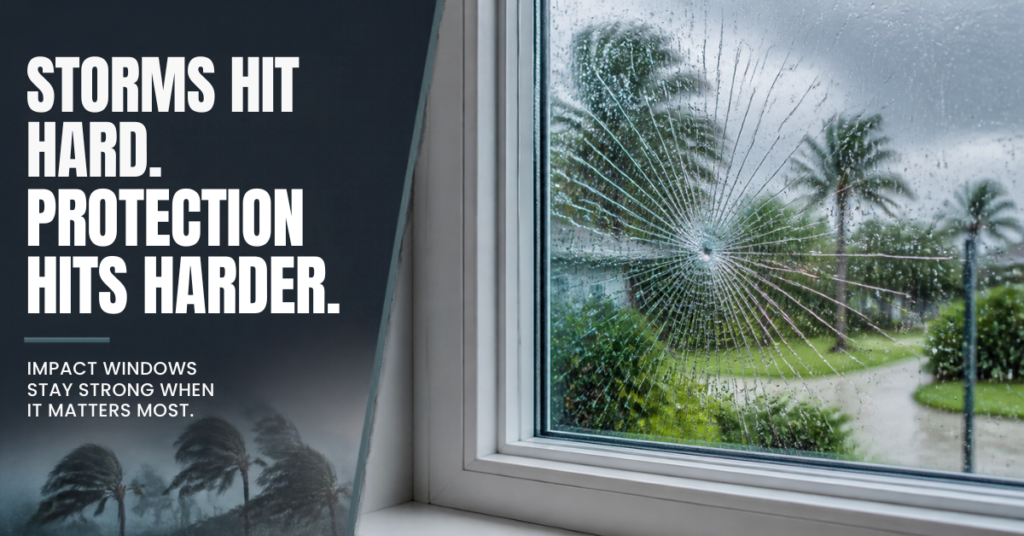
Impact glass is laminated, like a car windshield. A strong, clear interlayer (usually PVB or a similar material) is bonded between two layers of glass. If a branch or piece of debris hits it, the glass may crack, but the interlayer holds the pieces together and keeps the opening closed.
That matters because a broken window lets wind and rain into the house. Wind pushing in from below while it pulls on the roof from above can damage the roof and walls, and the water damage alone can be costly.
To earn an impact rating, the whole window unit (glass, frame, hardware and installation method) is tested. In the large-missile test, a 9-pound piece of 2×4 lumber is fired at the glass at about 50 feet per second. The window then goes through thousands of cycles of positive and negative wind pressure to show it stays closed after the hit.
What impact windows are not: they aren’t “hurricane proof” or unbreakable. They’re designed to keep the opening sealed so the storm stays outside.
Other Benefits of Impact Windows
- Security. Laminated glass is much harder to break through than standard glass.
- Quieter rooms. The laminated layer reduces outside noise from traffic, wind and neighbors.
- UV protection. The interlayer blocks most UV rays, which helps protect floors, furniture and artwork from fading.
- No shutter scramble. TDI notes that shutters aren’t required over impact-resistant windows, so you don’t have to put up plywood or close shutters every time a storm heads for the coast.
- Energy efficiency. Pair impact glass with Low-E coatings for Houston’s heat. Our guide to vinyl vs. composite windows explains the energy labels.
Impact Windows vs. Storm Shutters
Impact windows aren’t the only way to protect your openings. TDI lists custom-fit hurricane shutters as another option, and properly installed plywood panels as an emergency measure.
- Shutters cost less up front, but someone has to close them before every storm, and they don’t help if you’re away or the storm comes fast.
- Impact windows cost more but protect your home 24/7 with no setup, and they add security and noise reduction all year.
Many coastal homeowners choose impact windows for that reason. If budget is tight, impact windows on the most exposed sides and shutters elsewhere can be a middle ground. We’ll walk you through both.
Which One Is Best for the Texas Coast?
Choose impact-rated windows if:
- You live in Galveston, on the coast, or near open water such as Clear Lake, Seabrook or Kemah
- Your home is in the Texas Windstorm Insurance Association (TWIA) coverage area and must pass a windstorm inspection
- You travel or can’t count on being home to close shutters
- You also want better security and a quieter house
Wind-rated windows may be enough if:
- You’re farther inland, outside the coastal windstorm area, and your local code doesn’t require impact protection
- You’re comfortable using shutters or panels when a storm is coming
Even inland, Houston-area homes took serious wind damage during Hurricane Beryl in 2024. If you’re replacing windows anyway, it’s worth pricing impact glass alongside standard glass.
Windstorm Certification on the Coast
If your home is in the TWIA coverage area, window replacements need to meet the windstorm building code and be inspected so you can get a windstorm certificate from TDI. That certificate is what lets you buy or keep TWIA coverage. Depending on your home’s location, the code may require impact-rated windows or approved shutters. Ask your contractor which products and installation method they’ll use to pass inspection before you sign. Learn more in TDI’s windstorm protection FAQ.
Do Impact Windows Lower Your Insurance?
They can. TDI says discounts or credits for opening protection may be available, but they vary by insurance company. Call your agent before you buy and ask what documentation they need, and keep your product approval paperwork and windstorm certificate after installation.
How We Help
- We inspect your windows and openings and check whether your home is in the coastal windstorm area.
- We recommend impact-rated, wind-rated or shutter options based on your location, budget and goals.
- We give you a written estimate that lists each window’s rating and test standard. See our hurricane impact windows page for the products we install.
Why Homeowners Choose Master Remodelers for Impact Windows
- Family owned and operated since 1998, led by President Donald “Don” Borden.
- Rated A+ by the BBB, and winner of the Pulse of the City Award in 2025 and 2026.
- Licensed and insured.
- Free, no-obligation window estimates, with impact and standard options side by side.
- Financing through Slice by FNBO, subject to credit approval.
Frequently Asked Questions
Usually, yes. Both terms normally describe windows with laminated glass and reinforced frames that are tested to resist flying debris and hurricane-force wind pressure. Some companies use “hurricane windows” for windows that are only wind-rated, so ask for the impact rating and test standard, such as ASTM E1886 and E1996, in writing.
No. The Texas Department of Insurance notes that shutters are not required over impact-resistant windows. That’s one of the main reasons coastal homeowners choose them: there’s nothing to put up before a storm.
The glass can crack if it’s hit hard enough, but it’s designed to stay in the frame. The laminated interlayer holds the broken glass together so wind and rain stay out of the house. Impact windows are storm resistant, not unbreakable.
They can. According to the Texas Department of Insurance, discounts or credits for opening protection may be available, but they vary by insurance company. Ask your agent before you buy and keep your product paperwork and windstorm certificate.
It depends on where your home is. In the Texas Windstorm Insurance Association coverage area, replacement windows must meet the windstorm building code and pass a TDI inspection. In some locations that means impact-rated windows or approved shutters. Your contractor should confirm the requirement for your address before you sign.
For many Houston-area homes, yes. Even outside the coastal windstorm area, impact windows protect against storm debris without shutters and add security, noise reduction and UV protection. They cost more than standard windows, so compare both in your estimate.
Get a Free Impact Window Estimate
Related: Patio Covers · Outdoor Kitchens · Windows · Kitchen Remodeling · Garage Conversions · Roofing and Siding